
Isle of Arrows – Tower Defense
Studio Gridpop IncStrategy
4.0398.00 Reviews
- Version
- 1.1.4
- Installs
- 100.00K
- Age Rating
- Everyone
Screenshots
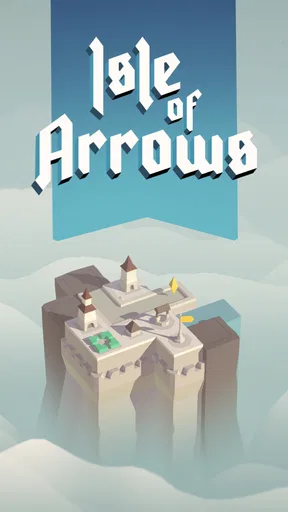
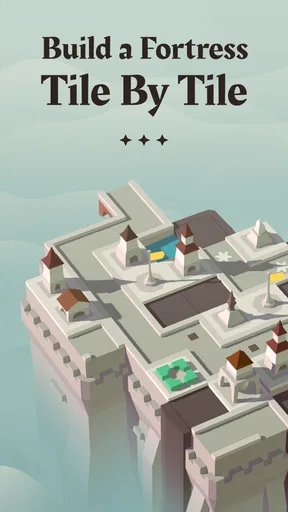
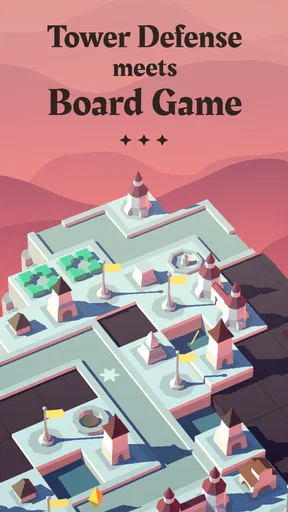
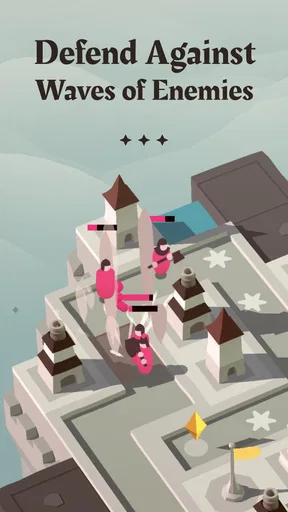

Our Review of Isle of Arrows – Tower Defense
 Analysis by Appyee
I like strategy games that make me think about space as much as strength, and Isle of Arrows – Tower Defense does that in a way that feels distinct from a standard wave-defense game. Its central pleasure is not simply choosing the strongest defense; it is making a useful island out of the tiles I receive while trying to keep attackers at bay. That mix gives each decision weight, though it also means the game asks for patience when a plan does not come together.
A strategy game built around constrained choices
Studio Gridpop Inc made this strategy game for players who enjoy making decisions with imperfect options. Instead of starting with a finished battlefield and filling it with defenses, I have to expand the island as the run develops. The board is both my construction project and my defensive problem, so a tile that looks helpful now can complicate the layout later.
That creates a useful distinction from familiar tower-defense games. In many of them, the path and build spaces are already defined; the puzzle is where to put each tower. Here, the shape of the play area is part of the puzzle too. I have to judge not only what a tile does, but also what its position may mean for the next choices. Thinking one or two placements ahead matters more than chasing a perfect layout from the outset.
The game’s roguelike structure makes that uncertainty feel central rather than incidental. I cannot expect every run to offer the same convenient arrangement, so adapting is more valuable than following a rigid blueprint. When a placement seems awkward, I try to treat it as a constraint to work around instead of assuming the run is already lost. That mindset makes the game more satisfying, especially for players who enjoy solving a board that keeps changing beneath them.
What makes the island-building work
From the get-go, Isle of Arrows draws you in with its strikingly minimalistic design. The game combines the classic elements of tower defense with a unique island-building mechanic. It's like someone decided to mix chess with a puzzle, and honestly, it works brilliantly.
The interface is clean, making it easy to dive right in. The tutorial is straightforward but don't be fooled—it quickly ramps up in complexity. You’ll be strategically placing towers on a grid-based board, with the twist of adding tiles to expand your island. This means every move counts, and there's always room for some creative problem-solving.
Gameplay Mechanics: Strategy Meets Creativity
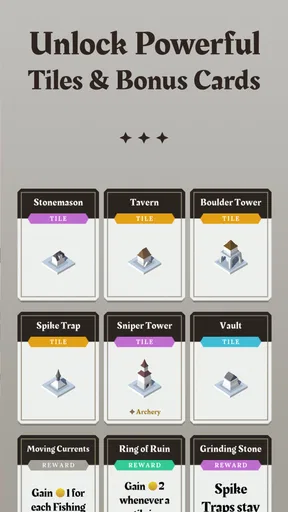
The gameplay is where Isle of Arrows truly shines. You're tasked with defending your island from waves of invaders, but here's the catch: you have to build your island as you play. Each turn, you get a new tile that could be a tower, a path, or an upgrade. Deciding where to place each one is the real challenge.
There's a satisfying depth to the strategy here. You can't just plonk down towers willy-nilly. You need to think about the future shape of your island and how to best utilize the space. It’s all about optimizing your layout to create the most efficient defense possible. And as the levels progress, this becomes increasingly challenging.
How I approach a run
My practical advice is to resist treating every available space as an opportunity to fill the board immediately. An open spot can preserve flexibility when the next tile does not suit the layout, while a hurried placement may leave fewer sensible options. I also try to consider the route through the island as a whole, rather than judging a tower or path only by its immediate usefulness. The strongest-looking move in isolation is not always the move that leaves the board easiest to defend.
This is a game where a small pause before placing a tile can save frustration later. I look for placements that serve more than one purpose: fitting the current shape, supporting a defensible arrangement, and avoiding a dead end for future expansion. That does not guarantee a clean run, since the draw can still force compromises, but it helps me make deliberate compromises instead of reactive ones.
For an everyday session, I can see it working well during a quiet break when I want something more involved than a quick reflex game. It rewards attention, so I would not pick it when I only have a few distracted seconds between other tasks. A short play window is still possible, but the enjoyment comes from following the board’s logic, not from tapping through without thinking.
Graphics and Sound: Simple Yet Effective
The graphics in Isle of Arrows are charmingly simple, but don't let that fool you. The clean lines and vibrant colors do a fantastic job of keeping the focus on the gameplay. It’s a reminder that sometimes less is more. The minimalist aesthetic also means the game runs smoothly on most devices, which is always a plus.
As for the sound, it complements the game's vibe perfectly. The background music is calming, which is great because you’ll need to keep a cool head as the difficulty ramps up. The sound effects are subtle yet satisfying, adding to the overall immersive experience.
Where the challenge can become friction
The same uncertainty that makes the game interesting can also make it feel less fair to players who want full control. A plan can be disrupted by the tile choices available, and there is a difference between adapting creatively and simply wishing for a more convenient option. I enjoy that tension, but I would not recommend the game to someone who expects every loss to be traceable to one obvious mistake or who prefers carefully scripted levels.
There is also a learning curve after the straightforward tutorial. Understanding what a tile might do is only part of the task; the harder skill is anticipating how its position affects later building. If I rush, the board can become difficult to read and my choices feel like guesswork. Taking time to inspect the layout helps, but that deliberate pace will not suit everyone.
Compared with a conventional tower-defense game, this is less about repeating a familiar lane setup and more about managing a changing board. If you mainly want rapid action, elaborate visual spectacle, or a fixed map to master through a single optimized build, a more traditional entry in the genre may be a better fit. If you like board-game-style spatial decisions and can accept imperfect runs, the blend here has a stronger appeal.
Who should make room for it
I would point this toward people who enjoy strategy but do not need every turn to have a single correct answer. It is especially appealing if you like arranging pieces, weighing short-term gains against future space, and revising a plan when the board develops in an unexpected direction. Players who already enjoy tower defense may appreciate how the island itself becomes an active part of the challenge rather than a static backdrop.
It is less suitable for someone looking for a casual game that can be played entirely on autopilot. The clean presentation may look relaxed, but the placement decisions deserve attention. It may also frustrate players who dislike randomness in strategy games or who want to build toward a precise layout without interruptions. In my view, the best fit is a patient player who enjoys experimentation more than perfect control.
One question a buyer may reasonably have is whether the game asks for a continuing payment. It is listed at $5.99, so I would approach it as a paid game rather than a free title built around an ongoing purchase decision. The price makes most sense if you expect to return to its strategic puzzle and enjoy learning through repeated attempts; someone uncertain about that style should think carefully before buying.
The game is rated Everyone, which makes its presentation broadly approachable, though the strategy itself may still be demanding for younger or less experienced players. It has an average rating of 3.9 from around 1.9 thousand ratings, with over 100 thousand installs. I read those figures as signs of a game with a real audience, not as a substitute for deciding whether its slower, spatial style matches what I enjoy.
Why You’ll Keep Coming Back
What kept me hooked on Isle of Arrows was the perfect balance between challenge and reward. Each successful defense feels like a triumph, and the desire to optimize your strategy for the next round is tantalizing. The game also offers a variety of modes and challenges, ensuring that boredom never sets in.
There’s also a leaderboard feature, so if you’re the competitive type, you’ll find plenty of motivation to refine your skills and climb the ranks. Plus, the game is regularly updated with new content, keeping things fresh and exciting.
Details worth knowing before you play
The game was released on November 3, 2022, and its current version is 1.1.4. Its minimum OS requirement is 7.1. Those details are useful when deciding whether it fits an older device, but I would still check that the version available for your particular platform matches your setup before purchasing.
For players wondering whether the island-building is just a novelty, I think it is the part that gives the strategy its identity. The board’s changing footprint makes placement decisions matter in a way that a fixed battlefield cannot. That also means a run can feel untidy even when I am making thoughtful choices; the goal is not always to produce a beautiful arrangement, but to keep the defense workable as new pieces arrive.
I also would not judge the game solely by the outcome of one attempt. A difficult run can teach me which spaces I should have preserved or which placement created a bottleneck. That reflection is part of the appeal, but it is only rewarding if I enjoy learning from setbacks. If I want a predictable challenge with a clear, repeatable solution, I would choose a different strategy game.
Final Thoughts: A Must-Try for Strategy Lovers
All in all, Isle of Arrows – Tower Defense is a gem for anyone who loves strategic games. It brings something new to the table while staying true to the core elements that make tower defense games so addictive. Whether you're a seasoned strategist or a casual gamer looking for a new challenge, this game is worth a spot on your home screen.
So, if you're ready to test your strategic mettle, give Isle of Arrows a shot. Just be prepared for it to become your new go-to game. Happy defending!
My recommendation is a little narrower than “for anyone who likes strategy.” I would choose it when I want a thoughtful, tile-by-tile defense puzzle and do not mind that the board may push back against my preferred plan. I would skip it when I need immediate action or strongly dislike unpredictable choices. For the right player, that tension is the point: each island is a problem to read, shape, and defend, not just a place to stack towers.
Verdict
Strengths of Isle of Arrows – Tower Defense
- Unique blend of board game and tower defense.
- Strategic depth with varied tile placements.
- Visually appealing with a clean interface.
- Offers challenging difficulty levels.
- Replayability with different game modes.
Limitations of Isle of Arrows – Tower Defense
- Can be difficult for beginners to grasp.
- Limited tutorial for complex strategies.
- Some levels feel overly luck-based.
- Requires patience for strategic planning.
- In-app purchases may affect balance.
Similar Picks in This Category
View All
Clash of Clans
Supercell4.5

Plants vs. Zombies™
ELECTRONIC ARTS3.7

Lords Mobile: Kingdom Wars
IGG.COM4.5

Clash Royale
Supercell4.4

State.io — Conquer the World
CASUAL AZUR GAMES4.1

Car Driving School : Car Games
Spark Game Studios3.9
Frequently Asked Questions
What is Isle of Arrows – Tower Defense?
Isle of Arrows is a strategic tower defense game that combines elements of board games and puzzles. Players strategically place towers on an ever-growing isle to fend off waves of enemies. With its unique blend of strategy and random elements, it offers a fresh take on the tower defense genre.
Is Isle of Arrows free to play?
Isle of Arrows is available as a premium app, meaning it requires a one-time purchase to download. There are no in-app purchases or ads, offering an uninterrupted gaming experience. This setup ensures that players can enjoy all features without additional costs after the initial purchase.
What platforms is Isle of Arrows available on?
Isle of Arrows is available for both Android and iOS devices. It is designed to run smoothly on a wide range of smartphones and tablets, providing an optimized experience regardless of the platform. Simply visit the Google Play Store or Apple App Store to download the game.
Does Isle of Arrows require an internet connection to play?
Isle of Arrows can be played offline, making it perfect for commuting or when traveling without reliable internet access. However, an initial internet connection is required for downloading the app from the respective app store. Once installed, you can enjoy the game anytime, anywhere.
What makes Isle of Arrows different from other tower defense games?
Isle of Arrows stands out due to its unique blend of tower defense mechanics with board game elements, offering a fresh strategic layer. Each game session is different, thanks to procedurally generated maps and random elements, which ensure that no two games are alike, enhancing replayability.
Play our best games!


